Edward Rulloff: Genius or Fiend?
"I want to be in hell in time for dinner."

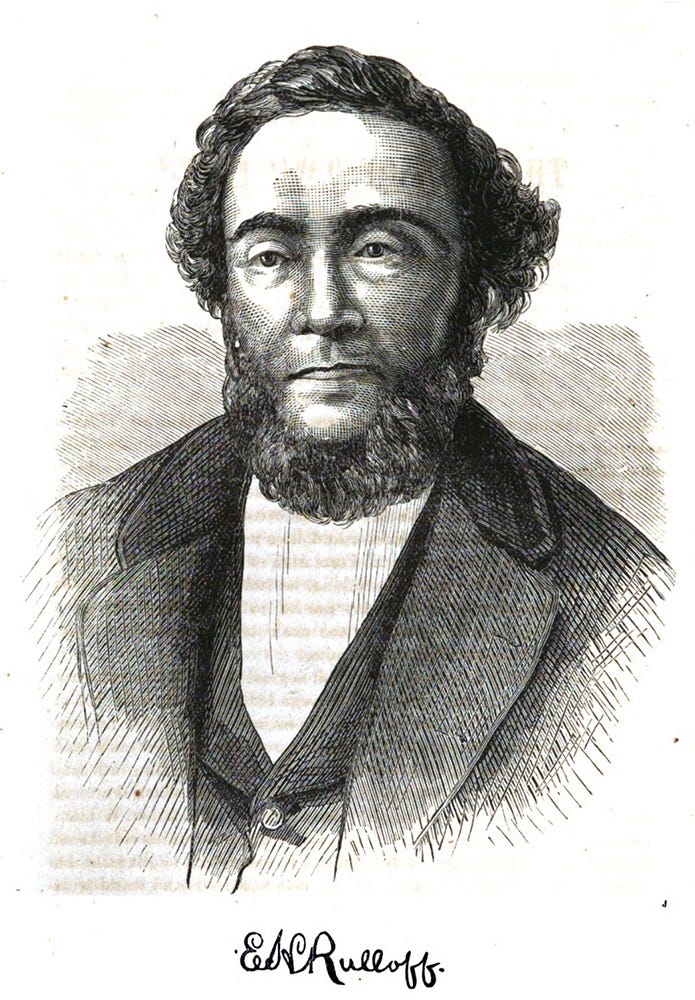
On the morning of May 18, 1871, a dense, eager crowd was transfixed by the gallows inside a jail yard in Binghamton, New York. They were there to watch the final moments of Edward H. Rulloff. By this point, the man’s true identity was scattered across dozens of aliases, a revolving door of professions, and a decades-long trail of blood. The papers couldn’t get enough of him, labelling him the “Genius Killer,” the “Man of Two Lives,” or the “Learned Monster.” Interestingly, the press wasn’t really debating whether he pulled the trigger on an eighteen-year-old shop clerk during a botched robbery. Instead, they were locked in a deeply emotional argument over whether a mind of supposedly brilliant intellect could legally—and morally—be destroyed by the hangman’s rope.
Even as the clock ticked down to his 11:38 am execution, Rulloff remained unfathomably cold. He was completely unrepentant and aggressively defiant, treating his death with total contempt. When a Catholic priest managed to get into his cell to offer some last-minute spiritual comfort, Rulloff cut him off, telling him to “make his remarks damned brief.” Then, as the grim line formed to march out to the scaffold, he turned to the sheriff with a blunt demand: “You won’t have any prayers or any damned nonsense down there, will you?” He walked up those wooden steps with an iron composure. Looking right at the gallows, he muttered his final, dark joke: “Hurry it up! I want to be in hell in time for dinner.” The trapdoor dropped. It took thirty-seven minutes before they lowered him into a coffin. The criminal career of Edward Rulloff was officially over, but the myths surrounding him were just getting started.

The Trail of Blood
To understand the monster beneath the scholarly facade, one has to look back decades before the Binghamton robbery to the dark path that led him to the gallows. His intellectual pursuits were never a separate, noble part of his life—they were entirely funded by decades of theft, fraud, and horrific domestic violence. Born John Edward Howard Rulofson in New Brunswick around 1819, his criminal streak started long before he ever crossed into the United States. By his late teens, he had already served two years in a Canadian prison for embezzlement and was highly suspected of burning down a building to hide his thefts.
Fleeing his past, he arrived in Upstate New York in 1842, reinventing himself as a schoolteacher and studying botanical medicine. This was where his possessive, violent nature really took root. In 1843, he impulsively married Harriet Schutt, a seventeen-year-old girl who had been one of his pupils. The marriage was toxic from day one. Harriet’s family completely disapproved of Rulloff, seeing him as a volatile outsider beneath their social standing. Rulloff’s fragile ego quickly warped into intense, obsessive jealousy, especially targeting Harriet’s cousin, Dr Henry Bull, a successful doctor whom the family had openly preferred as a suitor.
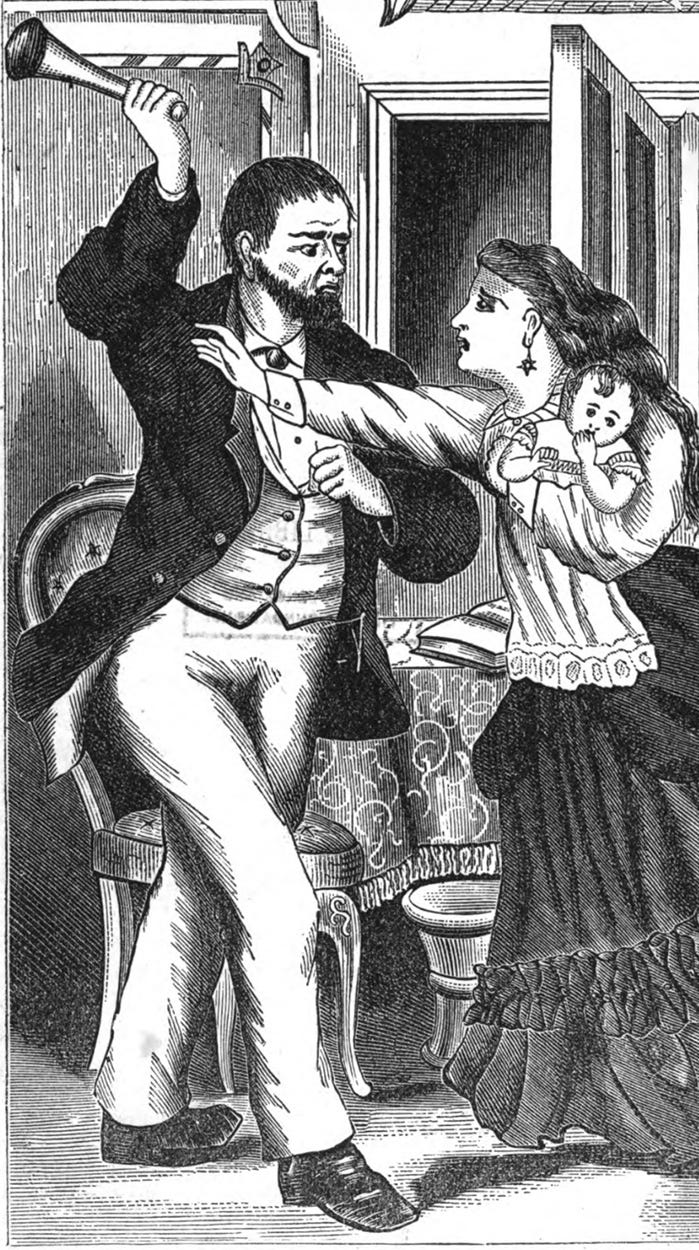
By 1845, the couple had moved to Lansing, New York, and had a baby girl named Priscilla. Desperate to cut his wife off from her family, Rulloff demanded they pack up and move to Ohio immediately. Harriet bravely stood her ground, refused to go, and threatened to leave him and go back to her parents. On the night of June 22, 1845, Rulloff’s rage exploded. Accusing his teenage wife of cheating, he struck her across the head with a heavy iron medicine pestle, fracturing her skull. As she lay dying on the floor, it is believed, but never proven or admitted, he turned to his infant daughter, Priscilla, and cold-bloodedly killed her too. He later admitted he thought about killing himself right after, but he just couldn’t bring himself to turn the violence on his own skin.
The next morning, Rulloff pulled off a ghoulish, calculated cover-up. He walked across the road to his neighbours, the Andersons, and borrowed a horse and a heavy lumber wagon, claiming he needed to take a large chest to his uncle. The neighbours watched him struggle under the immense weight of the chest, loading it next to a bulging, half-full sack. He drove straight out to the deep waters of Cayuga Lake. When he came back twenty-four hours later, the chest was light and empty. It’s likely the bodies of his wife and child were gone, sunk into the freezing depths, weighted down with heavy iron scraps. Rulloff casually told the neighbours that he and his wife were going on a sudden vacation, left his house in absolute chaos with dirty laundry and stained dresses thrown everywhere, and fled under the name “Mr Doe.”
No Body, No Crime
When Harriet’s brothers, Ephraim and William Schutt, discovered the trashed, abandoned house, they launched a relentless, cross-country manhunt. They finally tracked Rulloff down in Cleveland, Ohio, where he was hiding inside an immigrant train car heading out West. When his brother-in-law confronted him and demanded to know where Harriet was, Rulloff snarled a chilling reply that echoed for the next twenty-five years: “No man shall ever know where she was.”

Brought back to Ithaca in chains, Rulloff walked into a legal system that had absolutely no idea how to handle a sociopath of his calibre. Because Cayuga Lake was incredibly deep, heavy dredging operations couldn’t find the bodies of Harriet and Priscilla. Under 19th-century law, grand juries were deeply reluctant to indict someone for murder without a definitive corpse. Wanting justice by any means necessary, the district attorney changed tack. He prosecuted him for the kidnapping and abduction of his wife. Rulloff actually ran his own defence with terrifying confidence, leaning heavily on the fact that there was no body. Even so, a local jury found him guilty of the abduction of Harriet, and he was sent away for ten years of hard labour in Auburn Prison.
It was during this decade behind bars that the myth of the “learned scholar” really grew. Rulloff didn’t use his prison time for self-reflection or to change his ways; he used it to build an intellectual wall to hide his depravity. He taught himself advanced philology, convinced the prison guards to let him tutor local boys in Latin and Greek right inside his cell, and spent his nights working on his language manuscripts. His behaviour was so performatively perfect that prison administrators gave him special privileges, letting him work in the carpet-pattern design room where his artistic skills brought in good money for the prison. Yet, his total lack of a conscience was always on display. When another inmate asked him about his missing family, Rulloff reportedly laughed, bragging that he would let the muscles of his arms be burned out with a hot iron before he ever opened his mouth to tell anyone where they were buried.
Rulloff was in for a great surprise when his ten-year sentence ended in 1856. The moment he walked out of the prison gates, the Sheriff of Tompkins County immediately slapped handcuffs back on him with a brand-new warrant—this time for the actual murder of his daughter, Priscilla. Knowing his life was on the line, Rulloff launched a ferocious legal battle from his cell. He used his self-taught knowledge of criminal law to delay the trial for ages, but in 1858, a jury finally found him guilty of the child’s murder, despite the lack of a body, and sentenced him to hang.
Aided Escape
Although the conviction would be overturned by the court of appeal due to the lack of a body, while awaiting his execution date, Rulloff pulled off a brilliant, manipulative escape. He had spent months building a close friendship with Albert Jarvis, the young son of Ithaca’s undersheriff, whom Rulloff had been tutoring in classical languages. Using intense psychological mind games, Rulloff convinced the impressionable boy—and the boy’s mother, Jane Jarvis—that he was just an innocent, persecuted genius. With their help, Rulloff slipped out of his cell and vanished into the thick pine woods of Pennsylvania. He lived like a wild animal on wild nuts and stolen crops, losing some toes to frostbite along the way. This would prove a crucial event.
Rulloff repaid the Jarvis family’s loyalty by dragging young Albert into a life of squalor and crime. Re-emerging under the alias “James Nelson,” Rulloff used a superficial knowledge of mineralogy and anthropology to charm a wealthy inventor into a business partnership. He was actually on the verge of landing a prestigious college professorship in Pennsylvania when a desperate Albert Jarvis tracked him down. Albert told him that he and his mother were completely broke and threatened to expose him if Rulloff didn’t give them money. To fund the Jarvis family, Rulloff immediately went back to high-stakes burglary, robbing a jewellery store, getting caught, escaping jail yet again, and eventually moving to New York City. There, he formed a professional burglary ring, pulling both Albert Jarvis and a career criminal named William Dexter into his web. This parasitic cycle of manipulation, theft, and corruption is exactly what led Jarvis and Dexter to drown in the freezing Chenango River, and left Rulloff standing on the Binghamton scaffold.
A Botched Robbery
The crime that finally ended his run perfectly exposes the gritty, low-level reality of his life. On the pitch-black night of August 17, 1870, Rulloff and two younger accomplices, William T. Dexter and Albert Jarvis, slipped into Halbert’s dry goods store on Court Street in Binghamton. This wasn’t some masterfully planned heist. It was sloppy from the word go. The trio tried to burn chloroform to keep the two live-in clerks, eighteen-year-old Frederick Merrick and Gilbert S. Burrows, asleep during the robbery. Instead, Jarvis clumsily tripped over store fixtures, instantly waking both young men.
What followed was a chaotic, desperate brawl. Merrick reached under his pillow for a Smith & Wesson revolver, but the gun misfired. Undeterred, he grabbed a wooden stool and hurled it at Rulloff. Meanwhile, Burrows tackled Dexter, giving him a furious beating. Rulloff fired a warning shot into the ceiling, yelling at Burrows to stop, but the clerks fought on with incredible bravery. Merrick threw himself into the fray to protect his coworker. That was when Rulloff made a cold, calculated choice: he stepped forward, pinned Merrick’s head over the store counter, pressed his pistol directly against the back of the teenager’s skull, and pulled the trigger. Merrick’s head was shattered; he didn’t survive long. In that single moment, the “great scholar” proved he was nothing more than a panicked thug with a gun.
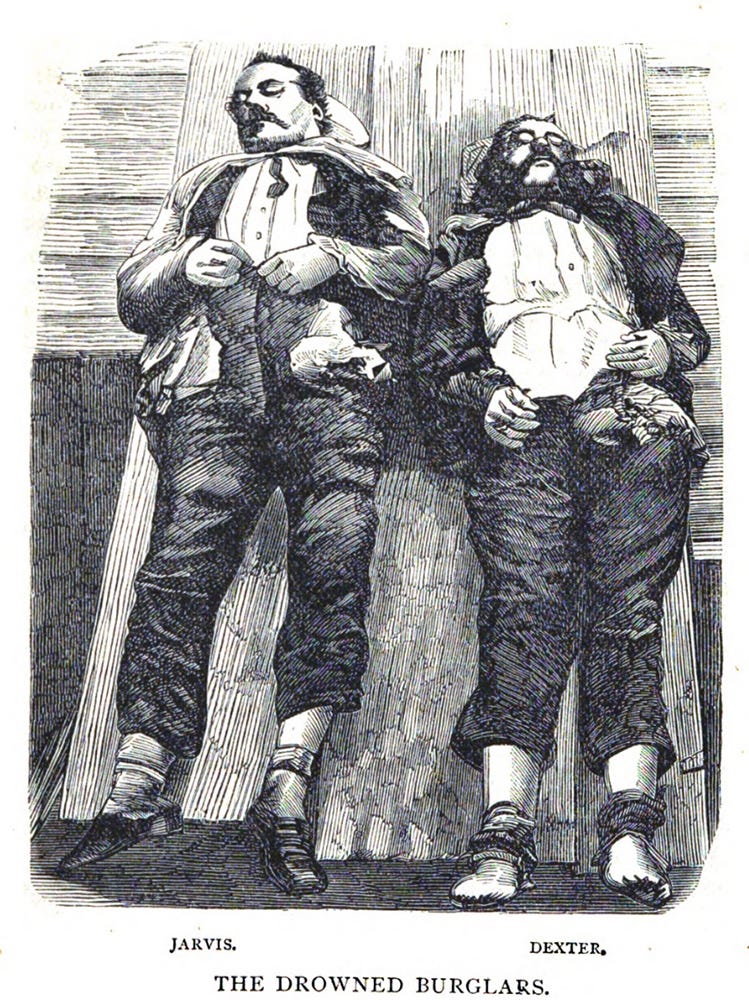
The escape turned into an absolute disaster. In the dark, they scrambled through the back doors and ran toward the Chenango River, looking for a hidden rowboat. Missing it in their panic, they dove straight into the treacherous, fast-moving current. Dexter, already badly beaten from the fight in the store, quickly lost consciousness and started to sink. Rather than trying to save his young follower, Rulloff let him drown. Jarvis, a decent swimmer, fought the current but ran out of strength just a few feet from the bank and went under. Rulloff alone dragged himself out of the muddy water. Maybe he felt a fleeting moment of regret, but it’s far more likely he didn’t care at all. He just fled, leaving his two young partners to float downstream as corpses.
Yet, his escape left behind a brilliant piece of evidence: a pair of custom leather boots. The toes lost to frostbite, years earlier, had left a unique shape inside the shoe he abandoned in the chaos of the crime scene, tying him directly to the murder.
This time, no matter how clever Rulloff thought he was, there was no escaping his crime. Time had run out, and now, justice for all his victims was about to be seen.
But before that, a public fiasco had to be played out, and I think Rulloff would have watched this with a wry smile on his face.
A War of Words
Rulloff’s final murder trial turned a local courtroom into a packed public arena. More than 2,000 spectators crammed into the building every single day. Journalists from all over the East Coast flooded into Binghamton to cover a genuinely shocking paradox. The guy facing the gallows for a botched shop robbery wasn’t some uneducated thug; he was an articulate, self-taught linguist who claimed to have mastered dozens of languages. Right from his jail cell, Rulloff held court. He took visits from elite professors who walked away baffled by his complex linguistic theories. He had spent decades on the run and behind bars compiling a massive manuscript titled The Method in the Formation of Language, a work he claimed would completely rewrite how we understand human speech.
Could a killer also be a high-brow intellectual? A war of words developed between some of the biggest cultural figures of the Victorian era. Horace Greeley, the famous editor of the New York Tribune and a passionate social reformer, actually launched a public campaign to spare Rulloff’s life. In Greeley’s eyes, Rulloff was simply “too curious an intellectual problem to be wasted on the gallows.” He argued that the state’s desire for basic eye-for-an-eye justice paled in comparison to the scientific breakthroughs locked inside the killer’s head. Of course, this stance fit right in with Greeley’s lifelong opposition to the death penalty, but with Rulloff, he added a highly specific twist: the man’s brain was just too valuable to destroy.
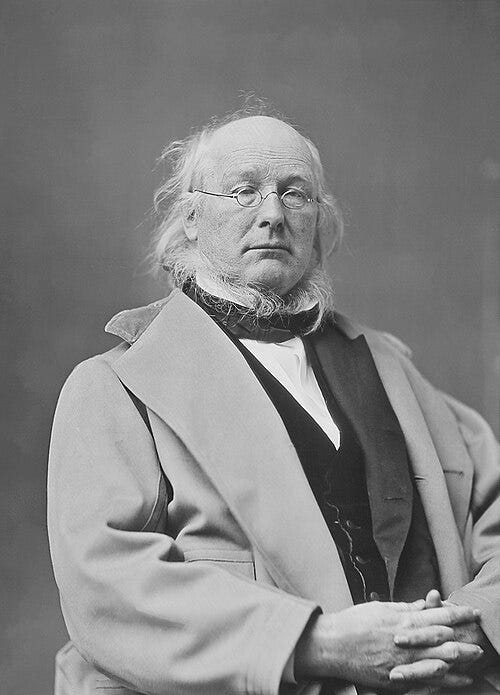
This high-minded idealism ran straight into the sharp, biting wit of Mark Twain. In a letter to the Tribune, Twain mocked the idea that academic potential or artistic talent could ever act as a shield for cold-blooded murder.
He poked fun at the sentimentalism of the New York intelligentsia, dryly offering to find a substitute—someone of absolutely no intellectual value—to confess to the crime and hang in Rulloff’s place, all to preserve the “precious genius” for his dictionaries.
Twain’s critique cut right through to the heart of the issue: Edward Rulloff wasn’t a tragic, wasted scholar who belonged in a university chair; he was a manipulative predator using the language of academics to deflect from his murders and his cowardly actions.
The Real Edward Rulloff
If you look past the sensational headlines and look at the facts, the illusion of a profound intellect, put forward by Greely, completely falls apart. Look at his actual scholarly work. Rulloff spent years trying to hawk his grand language treatise, even attempting to auction it off under the fake name “Professor Euri Lorio” to the newly formed American Philological Association. His asking price? A ridiculous $500,000. The Association took a look at the text, realised it was completely devoid of scientific merit, and flatly rejected it. Not a single person bid a dollar. His “revolutionary theories” were really just the disorganised, obsessive ramblings of a crank.
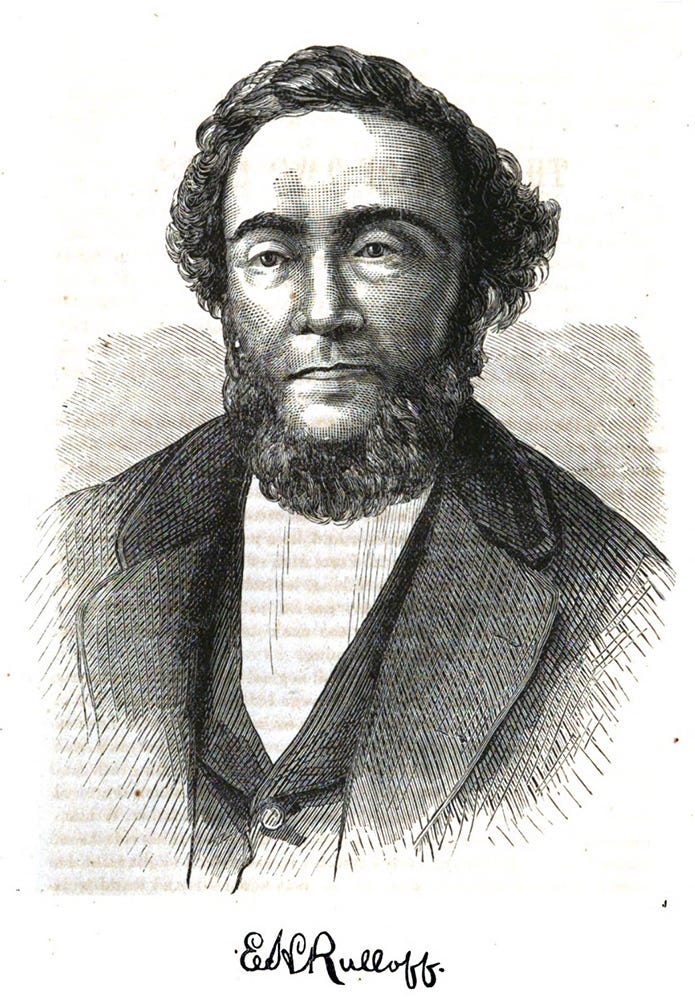
He wasn’t a brilliant man who lost his way. He was a lifelong criminal who happened to be reasonably intelligent. Rulloff’s true talent wasn’t linguistics or science at all; it was psychological manipulation, confidence tricks, and a towering arrogance that a gullible public mistook for genius.
The Legacy of a Learned Monster
Edward Rulloff was a textbook sociopath—a brutal, narcissistic criminal who realised that Victorian society had a romantic obsession with intellectual achievement. He deliberately put on the act of an eccentric academic because it was the ultimate camouflage. It allowed him to manipulate prison guards, seduce young followers, and get powerful newspaper editors like Horace Greeley to fight for his life.
When the gallows dropped in May 1871, it didn’t destroy a great mind. It simply put an end to a lifelong predator who had spent twenty-five years leaving a trail of ruined lives, broken families, and cold-blooded murder behind him. His massive, 1,673-gram brain, which still sits floating in a glass jar at Cornell University today, isn’t a monument to a brilliant intellect. Instead, it serves as a haunting historical warning: a great mind can easily be faked by a deceitful person who has a gullible audience.